A surgical case report has one narrow job: to let another surgeon reconstruct what you saw, what you did, and why it should change their thinking. That is all. It is not a short original article, and it is not a place to display a career's worth of technique. Most case reports that get returned or rejected are not weak cases. They are badly ordered cases, where the interesting decision is buried in paragraph nine and the follow-up is missing. The fix is structural, and it is mostly done before you write a sentence of prose.
Start With the Question the Case Answers
Before drafting, write one sentence on a blank page: This report shows that [problem] can be managed by [approach], with the caveat that [limitation]. If the sentence will not form, the case is not ready to be written, only to be thought about. Cases earn publication for a handful of honest reasons — an unusual anatomical variant that changed the approach, a modification that solved a specific intraoperative problem, a complication that others will meet and should recognise early, or a genuinely unexpected pathology. Rarity alone is thin. If the lesion is rare, say in the first paragraph why its rarity matters to a surgeon deciding on treatment.
Then read the target journal's author guidelines properly. Some surgical journals do not publish case reports at all; others accept them only as "clinical images", "lessons of the month", or short communications with a hard word limit and a cap on references and figures. Knowing you have 1,200 words and four figures changes how you select material far more than any writing advice.
Build the Clinical Section in a Fixed Order
Editors read dozens of these. A predictable order is a kindness, and it also stops you from leaving out something essential. The conventional sequence still works: structured abstract (background, case presentation, conclusion), keywords, short introduction, case presentation, discussion, conclusion, consent statement, references, figure legends.
Patient history and presentation
Give the minimum identifying detail: age band, sex, relevant occupation only if it matters. Avoid calendar dates and hospital file numbers; express timing as intervals — "presented four weeks after the onset of symptoms" is cleaner and safer than a date. Then present the complaint, the examination findings that changed your differential, the key laboratory or functional results, and the decision point at which you chose to operate. Apply one test to every sentence: does this alter the diagnosis, the indication, or the conduct of the operation? If not, cut it. Comorbidities belong only when they shift risk — anticoagulation, poorly controlled diabetes, previous surgery or radiotherapy in the same field.
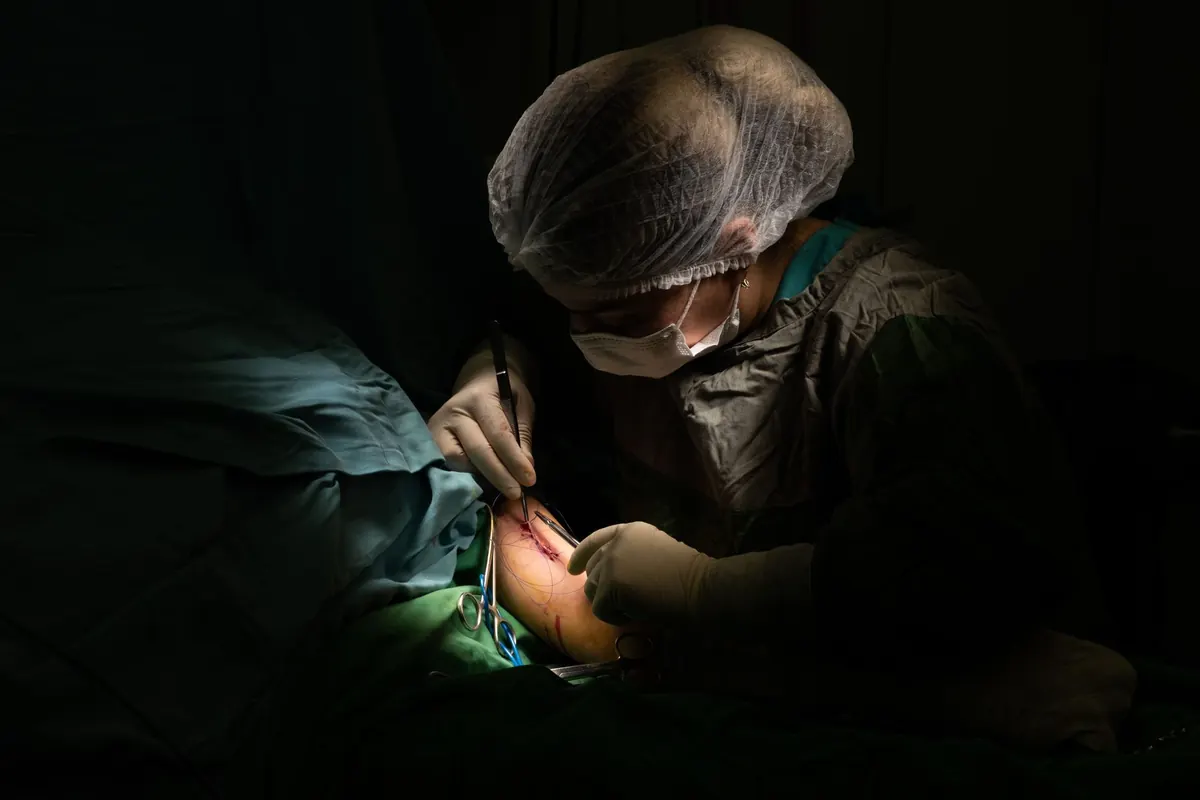
Operative findings and technique
This is where surgical case reports live or die. You are not reproducing the operative note; you are giving a colleague enough to recognise the situation and repeat the manoeuvre. A useful checklist:
- Anaesthesia, positioning, and the approach, in one or two sentences.
- The unexpected finding, described precisely — size, relation to named structures, consistency, vascularity.
- The manoeuvre or decision that made the difference, step by step.
- Reconstruction or closure, drains, and any prosthesis with its type (not a brand advertisement).
- Operative time, estimated blood loss, and any intraoperative complication with how it was handled.
- Histopathology, with grade, margins, or staging where relevant — and the immunohistochemical panel if it drove the diagnosis.
Be candid about what you did not do and did not know at the time. A report that admits a wrong initial assumption is more useful than one that reads like a demonstration. Close the section with outcome and follow-up: complications by type and timing, length of follow-up, and functional status measured on a scale you actually used.
Handle Imaging and Consent Before the Discussion
Choose figures that carry the argument, not figures that decorate it. Three to five well-chosen panels beat ten crowded ones: the diagnostic image, the intraoperative view that shows the anatomy, the specimen or histology, and the follow-up result. Crop to the region of interest, add scale bars and clean arrows, label panels A, B, C, and write legends that stand alone. Then de-identify properly — faces, distinctive tattoos, and burned-in annotations are the usual leaks, not just names and dates on the header.
Consent needs the same care. Most journals require written informed consent for publication of clinical details and images, obtained from the patient or, where the patient is a minor or lacks capacity, from the appropriate representative. State in the manuscript that consent was obtained, keep the signed document in the record, and follow your institution's and the journal's own requirements on ethics review or formal exemption for single-case reports. Do not copy a consent paragraph from another paper; requirements differ between countries, so confirm the local position with your clinical governance office rather than guessing. The CARE reporting checklist is a sensible framework to work through at this stage, even if the journal does not ask for it.
Write a Discussion That Argues, Not Recites
Four short paragraphs are usually enough. Open with what the case adds, in plain language, without repeating the abstract. Then place it against the genuinely comparable literature — a handful of real reports, not a citation dump — and say clearly where your case differs. Interpret the mechanism with appropriate hedging, because a single patient cannot establish causation, safety, or superiority. Then state the limits: no comparison group, one operator, short follow-up, retrospective selection of a case that went well.
Finish with what you would do differently. That sentence is often the most-read line in the paper. Keep new claims and new references out of the conclusion, and avoid the phrase "further studies are needed" unless you can say precisely which study and which question.
Style, Length, and the Details Editors Notice
Tighten every paragraph by one sentence after the first draft; the argument rarely suffers. Use past tense for what happened to the patient, present tense for established facts. Give drug doses and suture sizes consistently. Abbreviate only terms used at least three times. Check that the abstract's numbers match the table, that the follow-up stated in the abstract matches the case section, and that every reference is one you have actually read in full.
Before You Press Submit
Run this list once, slowly, and you will avoid most of the reasons a decent case report is delayed.
- One sentence exists stating what the case teaches — and the introduction says it.
- Word count, figure count, and reference count are inside the journal's limits.
- Timeline is expressed in intervals, with dates and identifiers removed.
- Operative section describes the decisive step so another surgeon could repeat it.
- Consent statement is present and accurate; ethics position is confirmed locally.
- Figures are cropped, labelled, and match their legends exactly.
- Discussion names the limitations before a reviewer does.
- Every author has read the final version and agreed to it.
A good case report reads as though the surgeon is standing beside you, pointing at the screen. Get the order right, keep the honesty in, and the writing becomes much easier than it first appears.
Photo: voltamax / Pixabay